
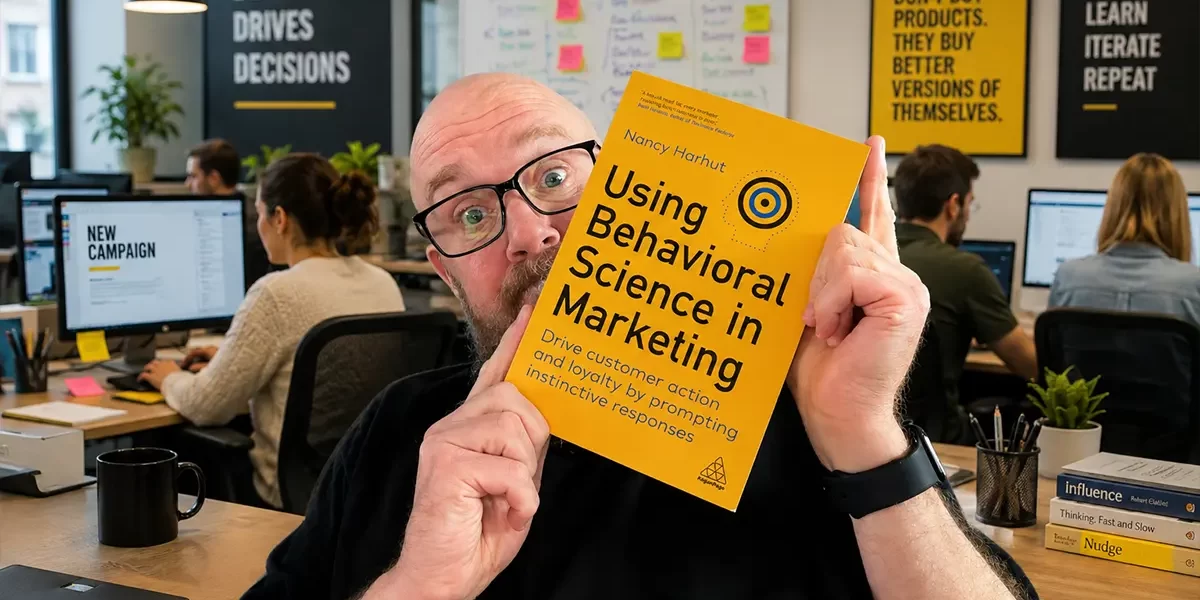
Book Review : Using Behavioral Science in Marketing by Nancy Harhut.
There’s a comforting illusion in marketing that customers are calmly weighing up product features, comparing prices rationally, and making thoughtful purchasing decisions based entirely on logic.
Nancy Harhut’s Using Behavioral Science in Marketing makes it clear that this idea is mostly a myth.
Honestly, as you read, you might realise your brain has been making decisions on its own for years.
The Big Idea (Spoiler: Humans Are Delightfully Predictable)
The book focuses on how behavioural science helps marketers understand the shortcuts, biases, and emotional triggers that shape customer behaviour every day.
Harhut explains many cognitive biases, such as social proof, scarcity, autonomy bias, and storytelling, and shows how these ideas affect engagement, trust, and decision-making.
This might sound a bit unsettling, but most of these behaviours already influence you all the time.
Usually, while online shopping at midnight.
Why This Book Works So Well
One of the book’s main strengths is how easy it is to read. While behavioural science can sometimes feel overly academic, Harhut keeps it practical, quick, and filled with real marketing examples from brands like Spotify, Apple, AT&T, and The Wall Street Journal.
Importantly, the book doesn’t just explain what behavioural principles are. It shows how to actually use these ideas, and you don’t need to be someone who talks about neuroscience over lunch.
Practical Without Becoming Pretentious
What makes Using Behavioral Science in Marketing so helpful is that almost every chapter has ideas you can use right away in campaigns, copywriting, email marketing, sales funnels, or brand messaging.
There’s very little filler.
No “unlocking paradigm-shifting synergy ecosystems.”
No dramatic claims about reinventing marketing forever.
Instead, you get smart, evidence-based insights that feel genuinely human. That’s a rare mix.
Why It Feels So Relevant Right Now
With so much AI-generated content and digital noise today, Harhut’s main point feels more important than ever: Human behaviour hasn’t changed nearly as much as marketing technology has.
People still respond emotionally before rationally. They still rely on shortcuts and instinctive reactions, and they still make decisions for reasons they often can’t fully explain.
So, understanding psychology might now be more valuable than just knowing how platforms work.
The Overthinker’s Verdict
If you’ve ever wondered why some headlines work better, why urgency drives action, or why customers sometimes act in ways that make no sense, this book gives a surprisingly reassuring answer: Humans are just wonderfully irrational.
Using Behavioral Science in Marketing doesn’t teach you how to manipulate people.
It teaches you how to understand people better. Really, that should have been the main goal of marketing all along.
The Quiet Takeaway
Technology changes fast. Human psychology changes much more slowly, and that’s exactly why this book is so useful.
Platforms, algorithms, and trends keep changing, but the human brain still works much the same way it always has.
Usually, while convincing itself that “limited time offer” genuinely means something.
Purchase this book online through our Amazon affiliate link https://amzn.to/4u5uNxb
Using Behavioral Science in Marketing: Drive Customer Action and Loyalty by Prompting Instinctive Responses
Writing Style
Content
Insight
Useful
Using Behavioral Science in Marketing by Nancy Harhut is a practical and engaging exploration of how psychology and behavioural science influence consumer decision-making. Blending real-world marketing examples with accessible explanations of cognitive biases and emotional triggers, the book demonstrates how small changes in messaging, timing, and presentation can significantly shape customer behaviour. Insightful without becoming overly academic, it offers marketers a useful reminder that while technology and platforms constantly evolve, human psychology remains remarkably consistent and understanding it may be one of marketing’s greatest advantages.