
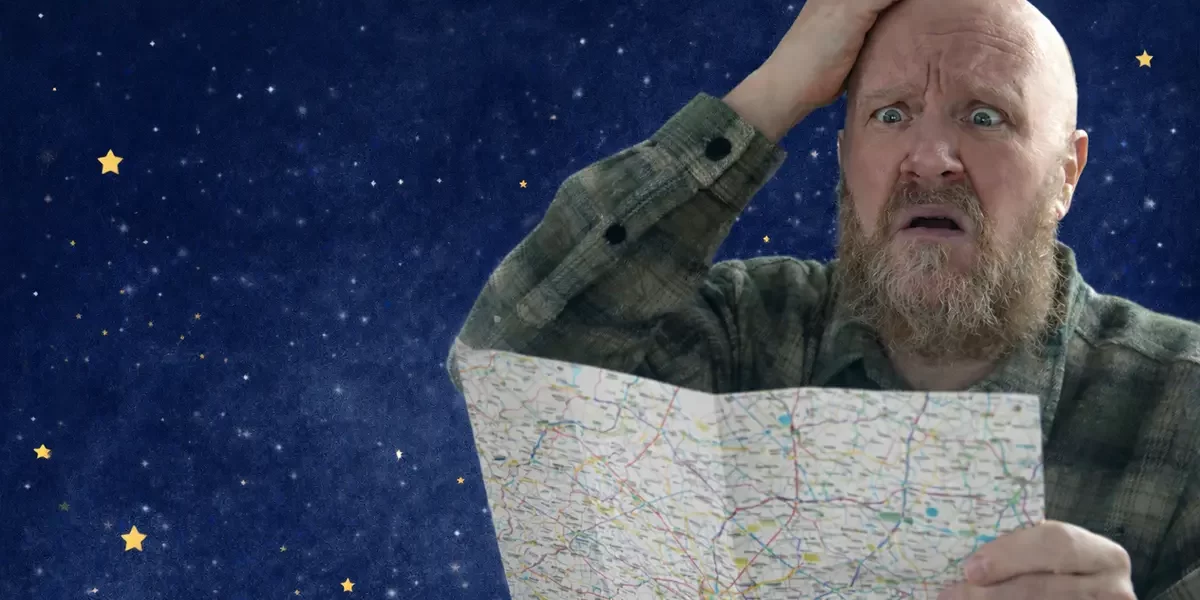
An overthinker’s guide to not accidentally ghosting your customers.
There is, in the vast and mostly uncharted universe of marketing, a peculiar phenomenon.
It is the moment a brand spends an extraordinary amount of time, energy, budget, emotional resilience, and at least one poorly considered brainstorming session involving sticky notes… just to get your attention.
And then promptly forgets what to do next.
This is rather like spending years building a spaceship capable of faster-than-light travel, only to realise, upon launch, that you’ve forgotten where you were going and also possibly left the passengers behind.
The Great Attention Heist
Modern brands are exceptionally good at attention.
They flash. They shout. They dance algorithmically across your screen like caffeinated peacocks in a TikTok wind tunnel. They interrupt your cat videos with suspiciously well-targeted ads for something you mentioned once in 2017.
And it works.
You click.
You pause.
You think, “Oh, that’s interesting.”
And in that moment, the brand has achieved what many consider the pinnacle of marketing success: you noticed them.
Unfortunately, this is also where most brands stop.
Not because they mean to but because they’ve mistaken attention for achievement, rather than recognising it as the starting pistol for a much longer, far more interesting race.
The Awkward Silence That Follows
Once attention has been secured, something deeply strange tends to happen.
Nothing.
No meaningful follow-up.
No emotional connection.
No sense that anyone, anywhere, has thought beyond the initial click.
It’s the digital equivalent of someone waving enthusiastically at you across a crowded room, making intense eye contact… and then immediately walking into a wall.
You’re left thinking: “Well, that was memorable, but not in a way that encourages a long-term relationship.”
Loyalty: The Forgotten Destination
Loyalty, in contrast, is not flashy. It doesn’t trend. It doesn’t shout. It doesn’t come with dramatic graphs that spike upward, making stakeholders clap politely.
Loyalty is quiet. Steady. Slightly suspicious of sudden movements.
And yet, it is the thing that keeps businesses alive when the attention economy inevitably wanders off to watch something else.
A loyal customer:
- Comes back without being chased
- Recommends you without being bribed
- Forgives the occasional wobble (assuming you don’t wobble spectacularly)
In short, they choose you again on purpose. Which is, if you think about it, both miraculous and mildly terrifying.
The Journey Nobody Maps
The journey from attention to loyalty is rarely ignored intentionally. It’s just… inconvenient.
It requires:
- Consistency (which is less exciting than a rebrand)
- Trust (which cannot be A/B tested into existence overnight)
- Experience (which involves actual humans having actual opinions)
It’s not a campaign.
It’s not a one-off push.
It’s not something you can solve with a slightly bolder font.
It’s a system.
A relationship.
A series of small, deliberate decisions that say: “We remember you. We value you. We’re not just here for the click.”
What the Good Ones Do Differently
The brands that successfully make this journey tend to behave in ways that are almost suspiciously reasonable. They:
- Deliver on the promise that got the attention in the first place.Which sounds obvious, but is surprisingly rare.
- Stay consistent, even when nobody is watching. Especially when nobody is watching.
- Make interactions feel human. Even if they’re powered by machines, algorithms, or a particularly enthusiastic spreadsheet.
- Think beyond the first transaction. Because the first sale is not the finish line, it’s the opening handshake.
A Brief Note on Overthinking
If you’re reading this, there is a reasonable chance you are an overthinker. Which, in this case, is actually quite useful. Because the journey from attention to loyalty requires a bit of overthinking:
- What does this customer experience actually feel like?
- Why would someone come back?
- What happens after the click?
These are not questions that can be answered by simply increasing the budget and hoping for the best. (Though this has been attempted. Frequently.)
The Quiet Power of Being Remembered
In a world obsessed with being seen, there is something profoundly powerful about being remembered.
Attention says: “Look at me.”
Loyalty says: “I trust you.”
And trust, unlike attention, does not vanish the moment someone scrolls.
Before We All Get Distracted Again…
The brands that win aren’t the ones that shout the loudest. They’re the ones that understand that attention is just the beginning of a conversation, and loyalty is what happens when you actually bother to continue it.
Preferably without walking into a wall.
If this made you think (or mildly panic about your current marketing strategy), you’re exactly where you’re supposed to be. And if you enjoyed this post, you’ll feel right at home on our podcast, where we dig into exactly these kinds of questions, with slightly more tangents and considerably less self-restraint. Give it a listen wherever you get your podcasts. We’d love to have you along for the conversation.