
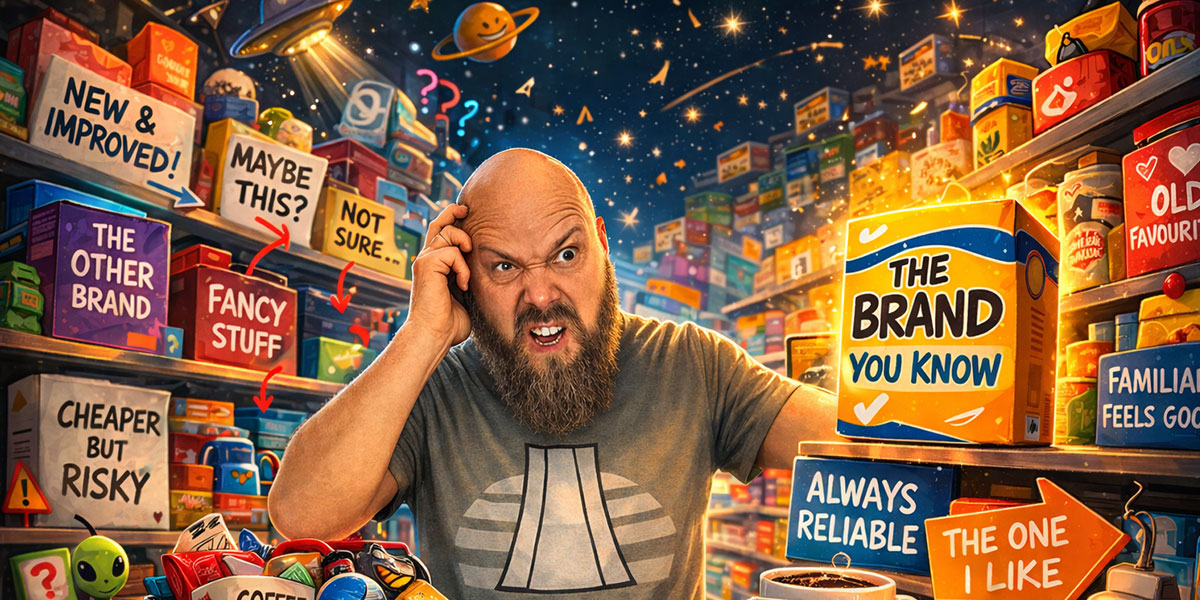
The Curious Case of the Human Brain, a Cup of Tea, and the Suspiciously Comforting Logo.
There is a peculiar habit among human beings which has puzzled philosophers, economists, marketing strategists, and at least one mildly confused Labrador for centuries.
It is this: People overwhelmingly prefer things that feel familiar. Not better, necessarily. Not cheaper. Not even objectively sensible. Just… familiar.
This is why people will walk past seventeen perfectly adequate cafés to buy coffee from the one place where they once had a pleasant croissant in 2014.
It is also why someone will confidently purchase a product they have never actually used before, simply because the packaging reminds them of something they think they trust.
The human brain, you see, is not the rational decision-making machine it likes to imagine itself to be. It is more like a slightly anxious librarian who prefers to keep the same books in the same place and gets very uncomfortable when someone reorganises the shelves.
The Brain Likes Predictable Things
Imagine you are wandering through a supermarket. You are faced with 27 varieties of biscuits, 14 brands of tea, and a suspicious number of sauces claiming to be “artisan”.
Your brain now has two options:
- Carefully analyse each product using logic, price comparison, ingredient evaluation, and long-term satisfaction modelling.
- Buy the one that looks like the one you bought last time and go home.
The brain almost always chooses Option 2.
This is not laziness. This is survival efficiency. Thousands of years ago, when humans were making purchasing decisions about things like berries that might kill them, familiarity was a very helpful system.
“Ah, yes,” the brain would say. “Those red berries. We ate those yesterday and did not die. Excellent. We shall continue the not-dying strategy.”
Modern shopping behaviour is essentially the same process, except the berries have been replaced by oat milk and subscription software.
Familiarity Feels Like Safety
The strange thing about familiarity is that it creates trust before experience.
When a brand looks, sounds, and behaves in a way that feels consistent, the brain relaxes. It says: “Ah. I recognise this pattern. This feels like something I’ve encountered before. I will therefore assume everything is fine.”
This is why consistent branding matters so much.
The colours, the tone of voice, the logo, the website, the emails, the packaging, they all become small signals telling the brain: “You’ve been here before. Everything is under control.”
And the brain loves being told that everything is under control. Mostly because it rarely is.
The Suspicious Comfort of Recognition
Consider what happens when you repeatedly see a brand.
The first time, you ignore it. The second time, you vaguely recognise it. The third time, your brain goes: “Oh! I know them.”
This is fascinating because you almost certainly do not know them.
You may never have purchased anything from them. You may not even remember where you saw them. But the brain does not care about such details. It cares about recognition, not accuracy.
Recognition feels like familiarity.
Familiarity feels like safety.
Safety feels like trust.
And trust, rather inconveniently for marketers trying to rush things, takes time.
Why New Brands Struggle
This also explains why new brands often feel like they are shouting into the void. They might have the best product. The best service. The most sensible pricing. But to the human brain, they are simply: “A completely new thing we have never encountered before.”
And the brain’s general policy toward new things is cautious suspicion.
This is the same instinct that once protected us from eating glowing mushrooms in the forest.
In modern terms, it translates to: “I will stick with the company whose logo I’ve seen five times already, thank you very much.”
The Secret Is Consistency
The brands people trust rarely appear overnight. They simply show up again. And again. And again.
Same voice. Same personality. Same visual identity. Same quiet signal that says: “We are still here. We are still us.”
Eventually, the brain relaxes completely and files the brand under: Things That Seem Reliable. Right next to tea kettles, familiar roads home, and that one chair everyone sits in, even though it technically belongs to nobody.
In the End, People Buy What Feels Known
For all our talk of strategy, innovation, disruption, and digital transformation, the truth is rather wonderfully simple.
Human beings are creatures of habit. We return to places that feel comfortable. We trust things that feel familiar, and when faced with uncertainty, the brain quietly whispers the same reassuring instruction it has followed for thousands of years: “Choose the one you recognise.”
Preferably with biscuits.
If you enjoyed this post, why not check out the latest episode of our podcast?


2 Comments