
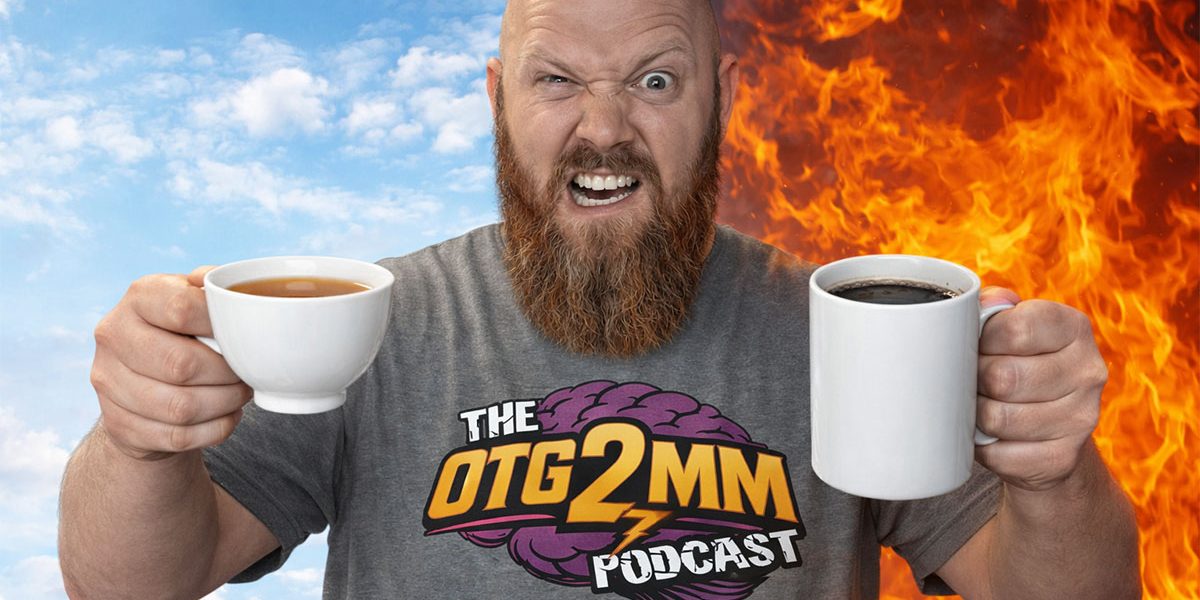
Ah yes. The ancient and deeply confusing question: Should your marketing be digital-first or print-backed?
A question which, much like “tea or coffee?” or “is this meeting necessary?”, appears simple but quickly spirals into philosophical chaos.
Let’s fix that by overthinking it completely, which is really the only sensible response. After all, no simple question about marketing should be allowed to remain simple for long if there’s a chance it can be turned into a full-blown strategic dilemma with notes, opinions, and at least one mildly panicked spreadsheet.
Digital-First, Print-Backed, and Other Existential Crises
There was a time when marketing was straightforward.
You printed a thing.
You handed it to a person.
The person either cared… or used it as a coaster.
Then the internet happened, and suddenly marketing became a dazzling, infinite expanse of possibilities, dashboards, metrics, pop-ups, cookies (not the good kind), and an algorithm that quietly judges your life choices.
Naturally, this led to a very serious debate: Should we go fully digital… or cling heroically to print like it’s the last lifeboat on the Titanic?
The answer, as it turns out, is yes.
But also no.
And occasionally it depends, which is marketing’s favourite way of saying “this is more complicated than we’d like.”
Digital-First (Or, Living Entirely Inside the Machine)
Digital-first marketing is fast, efficient, and measurable, three qualities that make it extremely appealing to anyone who enjoys knowing what’s going on.
You can track clicks, impressions, engagement, conversions… and, if you’re particularly committed, the exact moment someone hovered over your button and then decided absolutely not.
It’s scalable, adaptable, and endlessly optimisable.
It is also slightly exhausting. Because digital marketing requires you to:
- Post consistently.
- Analyse relentlessly.
- Adapt constantly.
- And maintain a polite working relationship with an algorithm that changes its mind more often than a toddler in a sweet shop.
It’s brilliant. It’s powerful. It’s necessary. It is also, occasionally, like trying to build a sandcastle during a windstorm.
Print (Or, The Radical Act of Existing Physically)
Print marketing, on the other hand, is beautifully simple.
It exists.
In your hand.
In the real world.
No loading time. No cookies. No mysterious drop in reach because Mercury is in retrograde and the algorithm has feelings.
Print has weight. Presence. Permanence.
A well-designed brochure doesn’t disappear because someone scrolled past it while thinking about lunch.
It sits there. Patiently. Waiting. Judging, and in a world oversaturated with digital noise, that physical presence can feel oddly refreshing. Like finding a handwritten note in a sea of automated emails.
Of course, print has its quirks: It doesn’t update itself. It doesn’t track engagement (unless you follow people around, which is generally discouraged) and once it’s printed, it is very committed to its decisions. But that commitment? That’s part of its charm.
Sustainability (Or, Trying Not to Ruin the Planet While Marketing)
At this point, someone raises an entirely reasonable concern: “Isn’t print bad for the environment?”
To which digital quietly coughs and looks away from the vast energy consumption of data centres, endless scrolling, and sending 47 emails to say “just circling back.”
The truth is, both digital and print have environmental impacts.
Print uses materials. Digital uses energy. Both can be wasteful if used carelessly.
Sustainable marketing isn’t about choosing one over the other, it’s about being intentional:
- Print less, but print better.
- Design for longevity, not landfill.
- Use digital where it adds value, not just because it’s there.
In other words, stop doing things “because that’s what we’ve always done” and start doing them because they actually make sense.
A radical concept.
Integration (Or, Why Choosing Is Slightly Missing the Point)
The real answer, the one that marketing professionals reluctantly admit after several meetings and at least one strong coffee, is this:
You don’t have to choose.
Digital and print are not enemies locked in an eternal battle for your budget.
They are tools.
Very different tools.
Trying to pick one over the other is like choosing between a spoon and a fork. It depends entirely on what you’re trying to eat.
The magic happens when they work together:
- A printed piece that drives people online
- A digital campaign that leads to a physical experience
- A brand that feels consistent whether it’s on a screen or in your hand
This is where marketing stops being chaotic… and starts being coherent. (Briefly. It will become chaotic again later.)
It’s Not About Channels. It’s About Thinking.
The digital vs print debate is, at its core, a distraction. A very compelling, slightly dramatic distraction, but a distraction nonetheless. Because effective marketing isn’t about choosing the “right” channel.
It’s about:
- Clarity.
- Intent.
- Consistency.
- And not doing things purely because someone on LinkedIn said you should.
Digital-first? Print-backed? Hybrid?
Yes. No. Maybe.
The real question is: Does it make sense for your audience, your message, and your goals?
If the answer is yes, you’re on the right track.
If not, you may just be screaming into a slightly more expensive void.
If you enjoyed this post, why not check out the latest episode of our podcast?